HJT Pursues Ultimate Efficiency, Flexible PV Enables New Forms of Solar Integration
Release time:2026-02-07 Click:1672
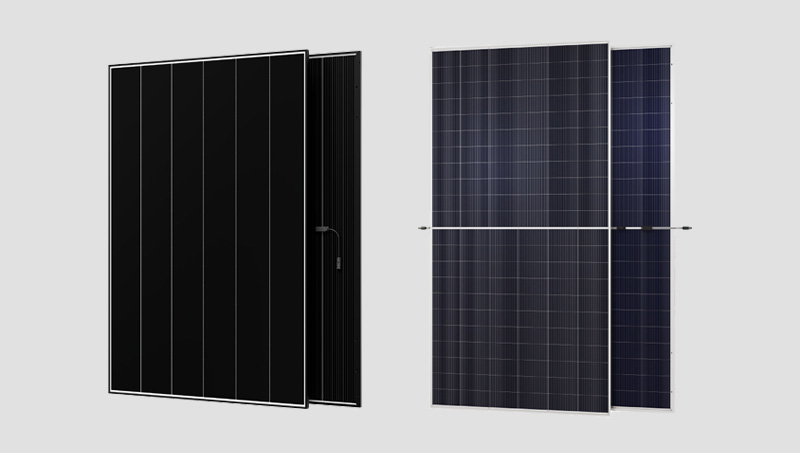
Summary: Heterojunction (HJT) and Flexible Photovoltaic modules represent two distinct, forward-looking technological pathways, each redefining the potential of solar energy. HJT technology, based on an intrinsic thin amorphous silicon layer sandwiched between crystalline silicon, achieves exceptionally high open-circuit voltage and low-temperature coefficients. Key technical efforts are devoted to advancing cost-effective conductive materials. This includes replacing high-cost silver with copper through advanced electroplating or low-temperature sintering pastes, and implementing transparent conductive oxide (TCO) layers with higher mobility and lower absorption. Its primary development direction is as a premier platform for tandem cells, particularly with perovskite, aiming to break the single-junction efficiency ceiling. On the other hand, Flexible Photovoltaic technology liberates solar cells from rigid glass substrates. It utilizes lightweight polymer backsheets or thin metal foils, enabling conformal installation on curved surfaces. Technical progress here focuses on developing flexible yet high-barrier encapsulation materials, creating robust and bendable transparent front sheets, and optimizing cell interconnection for repeated flexing. Its development is application-driven, targeting building-integrated photovoltaics (BIPV), vehicle-integrated PV, portable power, and wearable electronics. Both technologies highlight a future where solar is not just about cost per watt, but also about maximum energy yield per area (HJT) and seamless integration into our physical environment (Flexible PV).

 TEL:+852 5973 3006
 ADD:Unit 11, 9/F, The Cloud, No.111 Tung Chau Street, Tai Kok Tsui, Hong Kong
 EMAIL:info@sakanewenergy.com